
4-H / FFA LIVESTOCK MARKET

4-H / FFA LIVESTOCK MARKET
Each year, more than 250 Washington County 4-H / FFA members participate in the junior market livestock program. The Junior Market Livestock Shows & Sales, held in conjunction with the Washington County Agricultural Fair, provide members with an opportunity to showcase their project.
The success of this program depends upon the support of area residents and business owners. As purchasers of these animals, you will not only enjoy high quality meat, but will be supporting the development of our youth.
This webpage explains Washington County’s 4-H & FFA programs and outlines how you can support the program. In addition, fact sheets are available for market hogs, goats, lambs, rabbit pens and steers. Please review this material at your leisure. If you have any questions, please contact the Washington County Agricultural Fair Office.
We hope to see at the Washington County Agricultural Fair in August!
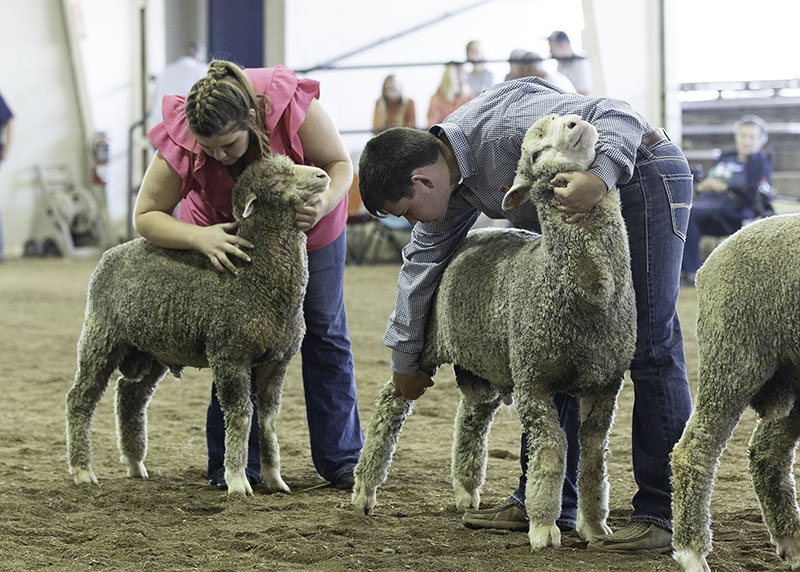
Animals Sold at Livestock Market
- Steers
- Hogs
- Goats
- Lambs
- Rabbits
What’s Involved in the 4-H / FFA Market Livestock Projects?
Involvement in market livestock projects teaches young people a number of skills throughout the year. They begin by selecting their animal, then go on to manage the feeding schedule. All project performance, such as rate of gain and feed efficiency, is monitored on all project animals. Members are assisted by their 4-H volunteer leaders, FFA advisors and family. They spend many hours grooming and training their animal to prepare for show day at the fair.
After months of care and feeding, members show and sell their project animals at the Washington County Junior Market Livestock Show. All animals exhibited must meet specific health requirements set by the state. The animals are divided into classes based on final weight and judged by livestock experts.
The member hopes that the sale proceeds will help them recover the cost of production as well as realize a return on their investment. Many will reinvest their funds for future project animals or advance to the livestock breeding 4-H project. These members also use this money to finance their advanced education. A small portion of the proceeds is deducted to cover costs incurred in operating the show and sale.
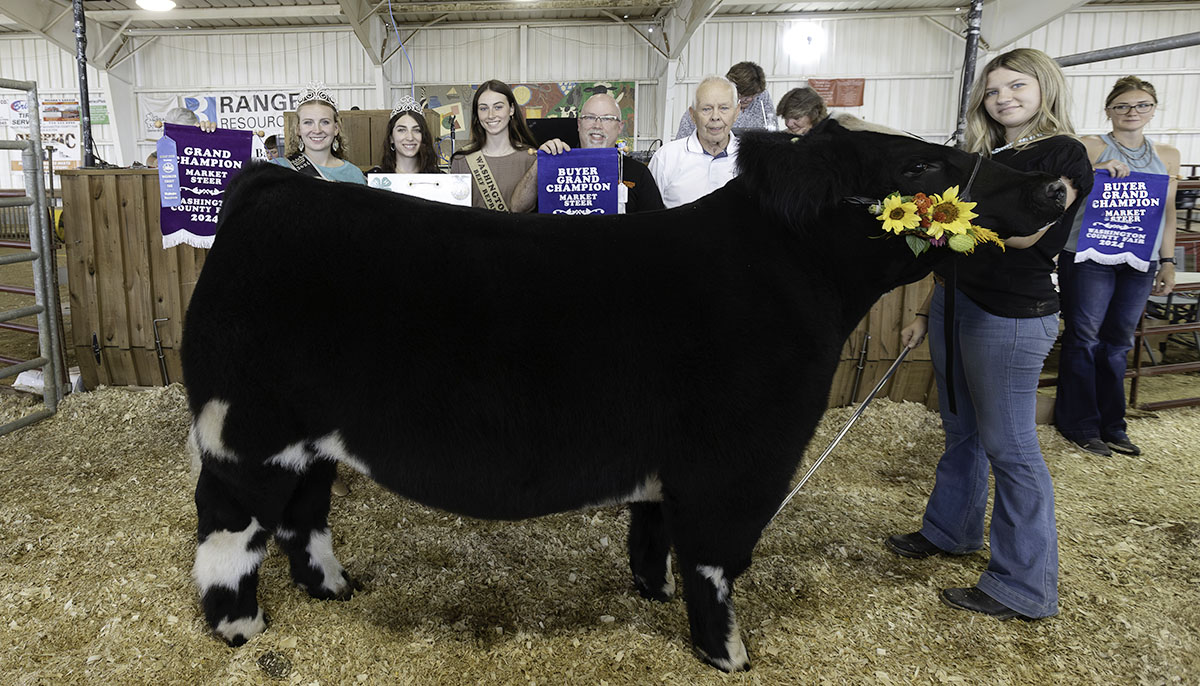
Buyer Options for the Livestock Market
Option 1
Purchase all of the animal for your own use
The most popular option is to purchase an animal for your own use. You may also choose to share an animal with a friend. If you prefer to purchase only half of an animal, you must make arrangements with a friend or colleague to purchase the other half prior to sale day. Please refer to “Five Easy Steps to Buying a Market Livestock Animal.”
Option 2
Purchase an animal with a friend or colleague
You may purchase an animal to share with a friend or colleague. If you prefer to purchase only half of an animal, you must make arrangements with a friend or colleague to purchase the other half prior to sale day. Please refer to “Five Easy Steps to Buying a Market Livestock Animal.”
Option 3
Donate your animal to the organization of your choice
Donate your purchased animal to the organization of your choice. You are responsible for assigning a packer and cost of process. You will also need to plan with the packer for you to deliver the processed meat to the organization of your choice.
Now that you have decided to support this program, be sure to mark your calendar with the appropriate date and time for the Washington County Agricultural Fair, then follow these steps:
Five Easy Steps to Buying a Market Animal
1. Arrive at the Fairgrounds at least one hour before the start of the market sale. Take some time to walk through the livestock barns and view the market animals offered for sale.
2. Register at the Buyers’ Table, located in the corner of the arena. Friendly people will record your name, address, and phone number and assign you a buyer’s number. Be sure to register so you can be recognized in the Buyers’ ad in the Observer-Reporter newspaper. Pictures of Champions and Reserve Champions and the purchasers will appear in this full-page ad.
3. Bid on your selected animal(s). Steers, lambs, hogs, and goats are sold by the pound. Rabbits are sold by the pen (3 rabbits in a pen). The auctioneer and ring men will take your bids. The cost depends on your bid and the weight of the animal. Approximate costs are listed on the animal fact sheets included in this packet.
4. Filling out your invoice is very important. Your name and complete address as well as the name of your preferred packer must be included on the invoice. You must also provide a number (cell and phone) that we can reach you on during the weekend. Packer will be calling on Sunday for cutting arrangements of your meat and to schedule a day to pick your meat. You must sign the bottom of your invoice. The member will also present you with a photo of your animal.
5. Settle your account at the Buyer’s Table before you leave. All animals must be paid for on the date of the sale. You do not have to wait until the sale is over.
The 4-H and FFA members are responsible for delivering the market animals to the packers after the sale.
A sincere “Thank You” is expressed to Range Resources and the many other businesses in the community for their support of the 4-H / FFA program!
For more information about the 4-H / FFA Market Livestock Sale please call the Washington County Agricultural Fair Office: 724-225-7718
Buying a Quarter of Beef
A typical quarter of beef from a cow with a live weight of 1300 pounds should provide you with about 142 pounds of meat.
Typical cuts from 1/4 cow:
- 7 ribeye steaks
- 6 T-bone steaks
- 3 sirloin steaks
- 3 sirloin tip steaks
- 3 round steaks
- 6 roasts
- 35 to 60 pounds of ground beef
Freezer space: You’ll need at least 4.5 cubic feet of space in a chest freezer or 5.5 cubic feet of space in an upright freezer for 142 pounds of beef.
Market Steer Fact Sheet
Cost Breakdown
Average live weight — 1250 lbs.
Average selling price — $.95/lb.
Selling price range — $.75/lb. – $2.00/lb.
Approx. carcass Weight — 775lbs.
Approx. amount of meat consumption — 450 lbs.
Approx. cost for meat processing — $250
Approx. Total Cost — $1,000 – $5,000
Summary of Beef Cuts
145 lbs. — Roasts
141 lbs. — Steaks
136 lbs. — Stew Meat & Ground Beef
19 lbs. — Other
Buying Half a Hog
A typical half a hog with a live weight of 250 to 270 pounds should give you 60 to 70 pounds of pork.
Typical cuts from 1/2 hog:
- 12 to 14 pounds of pork chops
- 3 pounds of spare ribs
- 8-10 pounds of bacon
- 15-18 pounds of ham
- 2 hocks
- 6 to 10 pounds of ground pork or sausage
- Additional products: heart, liver, tongue, fat and lard
Freezer space: 50 pounds of pork can fit in an empty, average-size home freezer with 2.25 cubic feet of space.
Market Hog Fact Sheet
Cost Breakdown
Average live weight — 235 lbs.
Average selling price — $1.20/lb.
Selling price range — $1.00/lb. – 7.00/lb.
Approx. carcass Weight — 165 lbs.
Average selling price — $60
Approx. Total Cost — $300 – $500
Summary of Pork Cuts
48 lbs. — Cured Pork
28 lbs. — Chops & Steaks
21 lbs. — Sausage
7 lbs. — Miscellaneous
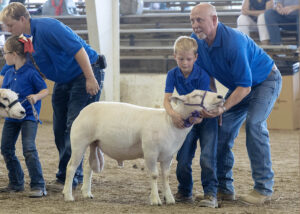
Buying a Lamb
A typical market lamb with a live weight of 140 pounds should give you 47 pounds of meat.
Typical cuts from a whole lamb:
- 8 = 8-ounce shoulder chops
- 16 = 4-ounce rib chops or 2 2-pound crown roasts
- 14 = 6-ounce loin chops
- 4 = 1-pound shanks
- 2 = 2-pound sides of ribs
- 10 to 12 pounds of ground lamb
- 15 pounds of boneless leg for kebabs, stew meat, roast, or ground lamb
Freezer space: 47 pounds of lamb needs 2.25 cubic feet of space in an average-size home freezer.
Market Lamb Fact Sheet
Cost Breakdown
Average live weight — 110 lbs.
Average selling price — $1.10/lb.
Selling price range — $1.00/lb. – $10/lb.
Approx. carcass weight — 55 lbs.
Approx. amount of meat for consumption — 42 lbs.
Approx. cost for meat processing — $30
Approx. total cost — $150 – $500
Summary of Lamb Cuts
24 lbs. — Roasts
8 lbs. — Chops
9 lbs. — Ground Lamb
Market Goat Fact Sheet
Cost Breakdown
Average live weight — 90 lbs.
Average selling price — $1.10/lb.
Selling price range — $1.10/lb. – $10.00/lb.
Approx. carcass weight — 45 lbs.
Approx. amount of meat for consumption — 35 lbs.
Approx. cost for meat processing — $30
Approx. total cost — $130 – $150
Summary of Goat Cuts
17 lbs. — Roasts
6 lbs. — Chops
7 lbs. — Ground Goat
Market Rabbit Fact Sheet
Average Live Weight — Not more than 5 lbs./rabbit = 15 lbs. for a pen of 3
Approximate Total Cost – $105 ($200/pen)
*Market Rabbit Pens have been sold since 1993 and are available only at the Washington County Agricultural Fair. Most of the pens have been donated to the Scholarship Fun or back to the Exhibitor. No carcass data is available.
What is 4-H?
Whoever you are, wherever you are, 4-H is for you! Washington County 4-H is an informal, educational, character and skill-building youth program. We offer a variety of educational projects designed to encourage the development of initiative, self-esteem, and a sense of responsibility. Members can choose projects that fit their interests and abilities. Projects involve hands-on learning, setting goals and evaluating one’s progress through our community based 4-H clubs and caring adult volunteers. 4-H is open to anyone who is at least 5 year of age and have not passed their 19th birthday before December 31. Adults can participate as screened volunteer leaders.
For more information about 4-H, contact Sheila Hackinson, 4-H/Youth Development Educator
Phone: 724-207-2006
Email: [email protected]
What is FFA?
The National FFA organization is a dynamic youth organization that changes lives and prepares students for premier leadership, personal growth and career success. In Washington County, several high schools offer the FFA program to students – McGuffey, Trinity, Avella, California, Mon Valley Career-Tech Center and Fort Cherry/H.G. Parkinson FFA. Students are eligible for membership in Junior FFA in the 7th and 8th grades and high school FFA beginning in the 9th grade and continuing until the fourth National FFA Convention after they graduate from high school.
Through class and shop work, as well as school and home projects, FFA members learn about agricultural practices and develop skills related to animal husbandry, mechanics, agronomy, horticulture and agribusiness management.
FFA members can have the opportunity to compete in county activities, such as public speaking, livestock and dairy judging, and parliamentary procedure. After successfully competing on a county level, members may advance to regional, state and national competitions.
FFA High School Contacts:
McGuffey High School – [email protected]
Avella High School – [email protected]
HG Parkinson – Fort Cherry – [email protected]
Trinity High School – [email protected] , [email protected]
California High School – [email protected]
Mon Valley Career-Tech Center – [email protected]